The best crochet sweater ideas for fall are built from simple shapes: drop-shoulder rectangles, top-down raglans, round yokes and granny squares. Pick a wool blend in worsted weight, add 4 to 10 inches of ease, and most of the sweaters below are within reach once you can work even rows of double crochet.
There is a week in early fall when the air turns and you suddenly want to be wrapped in wool. That is usually when I start a new sweater, the kind you wear until the elbows go thin.
Sweaters look less scary once you see how they are built. Below are fifteen fall looks, each broken down by construction, stitch, yarn weight and the one detail that makes it work, so you can choose your next garment with your eyes open.
Jump to a Section
Crochet Sweater Ideas at a Glance
Compare construction and difficulty before you buy a sweater's worth of yarn.
| Sweater | Construction | Main Stitch | Yarn Weight | Skill |
|---|---|---|---|---|
| Cream cable turtleneck | Flat panels, seamed | Post stitch cables | Bulky | Advanced |
| Rose mesh pullover | Top-down raglan | Open mesh | DK cotton blend | Intermediate |
| Ivory openwork pullover | Drop shoulder rectangles | DC and eyelet rows | Worsted | Confident beginner |
| Scrap stripe sweater | Drop shoulder rectangles | Mixed textures | Worsted | Intermediate |
| Caramel long cardigan | Rectangles plus band | Moss stitch | Worsted wool blend | Confident beginner |
| Green turtleneck | Drop shoulder | Hdc rows | Worsted wool | Intermediate |
| Ribbed cuff detail | Any | Post stitch rib | Any | Beginner |
| Diagonal colorblock | C2C or shaped rows | Sc and hdc | Worsted | Intermediate |
| Openwork vest | Front and back panels | Lace grid | DK cotton | Confident beginner |
| Wide stripe pullover | Drop shoulder rectangles | DC rows | Worsted | Confident beginner |
| Olive yoke sweater | Top-down yoke | Shell stitch yoke | Worsted | Intermediate |
| Burgundy cable cardigan | Flat panels, seamed | Cables and basketweave | Aran | Advanced |
| Camel ribbed raglan | Top-down raglan | Back loop hdc rib | Worsted | Intermediate |
| Granny square sweater | Squares joined | Granny clusters | Worsted | Confident beginner |
| Teal textured pullover | Drop shoulder | Waffle or moss | Worsted | Intermediate |
1. A Cream Cable Turtleneck

Crochet cables are made with front post treble stitches that cross over each other every few rows. Between the cable columns, work narrow panels of moss stitch (alternating sc and chain 1) so the surface stays interesting in a single color.
Work the front, back and sleeves as flat panels, then seam them. Crochet the collar separately as a tall ribbed tube and attach it last, so you can make it taller or shorter without touching the body.
Sara's Studio Tip: Cables pull the fabric in. Swatch at least 8 inches wide in the full cable pattern before you trust your gauge.
2. A Dusty Rose Mesh Pullover

The stitch is an open mesh worked in rows: (dc, chain 1, skip 1). Worked top down, the raglan increases sit on four diagonal lines from the neck to each underarm, so the sweater grows in one piece with no seams.
Finish the neckline with a small scallop of 5 dc in one stitch, skip 2, sc, skip 2, instead of ribbing. Gather the long sleeves into snug cuffs and block the whole sweater flat with pins so the mesh opens evenly.
3. An Oversized Ivory Openwork Pullover

The stitch alternates two rows of solid double crochet with one row of eyelet spaces, (dc, chain 1, skip 1). That gives a horizontal stripe effect without a single color change, so there are almost no ends to weave in.
Make the front and back as two identical rectangles, seam the shoulders, then work the sleeves straight down from the armhole, decreasing every few rows. Finish with ribbing at the neck, hem and cuffs.
4. A Scrap Yarn Stripe Sweater

The trick that holds it together is the rust at the neckline, cuffs and hem. Repeat one anchor color at every edge, and the stripes in between can be as random as you like.
Use the drop-shoulder rectangle shape from the ivory pullover above, and keep a texture sampler swatch so every stitch you choose works to the same gauge.
The smallest leftovers make good gifts too: our crochet accessories ideas turn tiny amounts of yarn into scrunchies, bows and bag charms.
5. A Long Caramel Cardigan

The body uses a pebbled texture such as moss stitch. Work the back as one long rectangle and the two fronts as narrower rectangles, then seam the shoulders and sides and add straight sleeves.
The wide ribbed band runs from one hem, around the neck and down to the other hem in one continuous strip. Work it in back-loop single crochet rows, then sew it on. A wool blend helps a long body keep its shape over time.
Our crochet wearables collection has more cardigans, hats and wearable basics.
6. A Forest Green Turtleneck

The turtleneck is a tall ribbed tube that folds over once. Work it in back-loop single crochet rows and seam it to the neckline after the body is done.
A deep hem band is the fix if your finished sweaters always grow. A row counter helps you keep the body and sleeves the same length.
7. The Ribbed Cuff That Makes a Sweater Look Bought

Alternate front post and back post double crochet to build tall vertical ribs with real stretch. Make the cuff twice as deep as you want it, then fold it back on itself. The fold adds warmth and hides any wobbly ends.
Block the ribbing with pins while it dries so the columns stay straight.
8. A Rust and Cream Diagonal Colorblock Pullover

The easiest way to get the diagonal is corner-to-corner crochet for the front and back panels, changing color halfway through. If you prefer rows, move the color change one stitch over on every row.
Match the ribbing to whichever color each section ends in: rust neckband, cream hem, and one cuff in each color.
9. A Cream Openwork Sweater Vest

Work the front and back as two panels in a lace grid, small clusters separated by open squares. Shape the V neck by decreasing one stitch at the center edge every other row.
Finish the neckline, armholes and hem with ribbing. A smooth cotton keeps the openwork crisp instead of fuzzy.
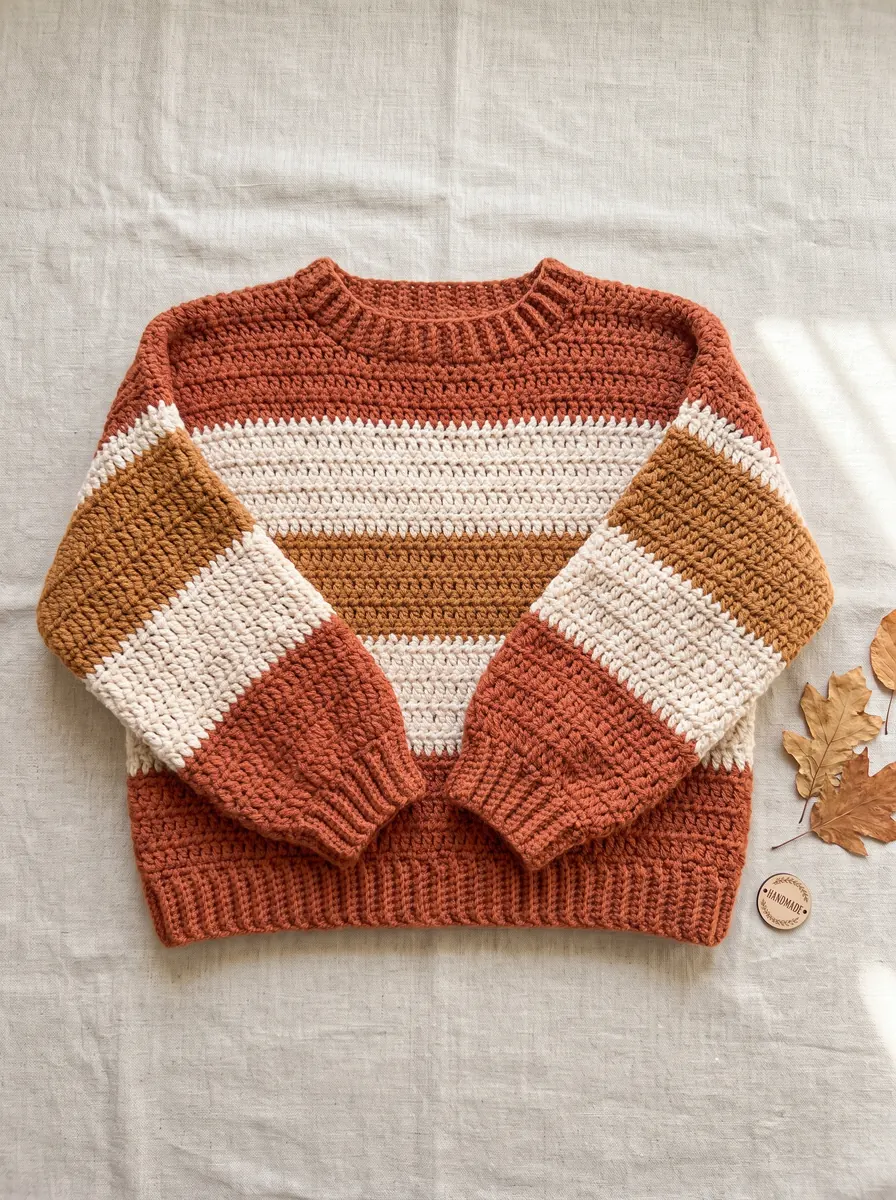
10. A Wide Stripe Pullover in Terracotta, Mustard and Cream

Work the stripes in plain double crochet rows. Order the sleeve stripes differently from the body so they do not line up. That small mismatch looks intentional and expensive.
Edge the collar, cuffs and hem in solid terracotta ribbing. Sew a small leather or wooden tag into the hem as a five-minute finishing touch.
11. An Olive Yoke Sweater With a Shell Stitch Band

Start with the ribbed collar, then work the yoke in rounds of shell stitch, adding stitches between the shells to widen it. When it reaches the underarm, separate the sleeves and work the body in plain hdc rounds with no side seams.
Olive is softer than forest and warmer than sage, and it pairs with the tan and cream trousers most of us already own.
12. A Burgundy Cable Cardigan With Patch Pockets

Between the cable columns, work panels of basketweave made with blocks of front and back post stitches. Work the ribbed band up one front, around the neck and down the other, adding buttonholes as you go rather than later.
Make each pocket as a small square with its own ribbed top edge and a cable through the center, then sew it on so it lines up with the body cables.
13. A Camel Ribbed Raglan

Work the body and sleeves in half double crochet through the back loop only, turning rows sideways so the ribs run top to bottom. The raglan lines run in smooth diagonals from the neck to the underarm.
Finish the hem with a band ribbed in the opposite direction. That contrast between vertical body and horizontal hem gives the sweater a crisp edge.
14. A Granny Square Sweater

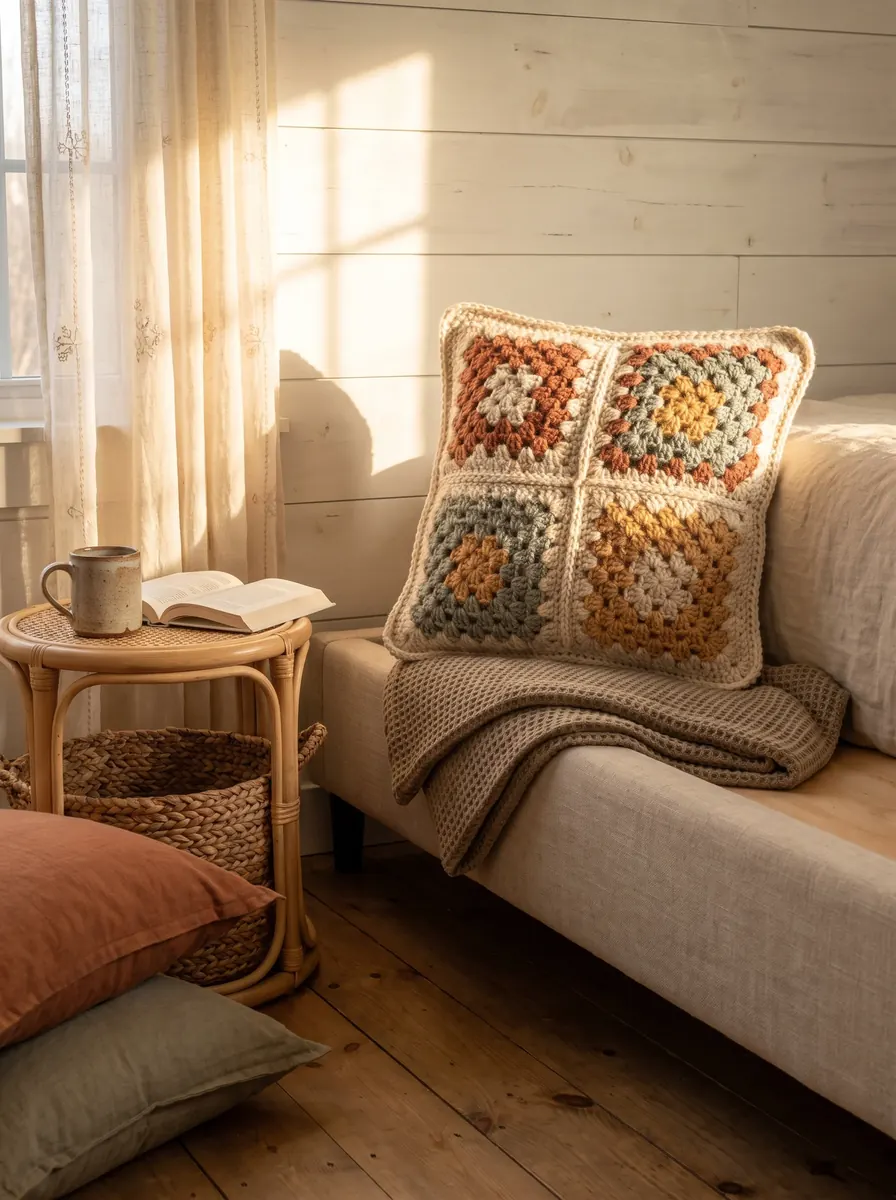
Join the squares with mustard slip stitch so each block is outlined. Work a grid of squares for the front and back, then a strip of squares down each sleeve. Finish the neckline, cuffs and hem with solid mustard ribbing.
This is the most portable sweater here, since squares fit in a bag and travel well.
15. A Teal Textured Pullover

The texture is a small grid across the body and sleeves. A waffle stitch made with front post double crochet gives that look, as does a simple moss stitch with a slightly tighter hook.
Drop the shoulders, make the sleeves slightly full and cinch them into ribbed cuffs folded once. End the body at the hip for high-waisted jeans.
Choosing Yarn for a Crochet Sweater That Does Not Sag
The single biggest sweater mistake is the wrong fiber. Heavy pure acrylic stretches under its own weight and never bounces back.
Wool: Has memory and springs back after washing. Superwash wool can go in the machine on a wool cycle.
Wool blends: 20 to 50 percent wool gives you memory, easier care and a lower price. The best all-round choice.
Cotton: Drapes well but is heavy and does not recover. Save it for vests, mesh pullovers and cropped pieces.
Weight matters too. Worsted takes longer but gives a sweater you can wear indoors. Bulky is fast but runs warm.
Fit Tips for Your First Crochet Sweater
Ease: Measure your chest and add 4 to 6 inches for a relaxed fit, or 8 to 10 inches for an oversized look.
Swatch and wash: Make a 6-inch square in your stitch, wash and dry it the way you will wash the sweater, then measure. Ten minutes of swatching saves forty hours of regret.
Sleeve length: Measure from the underarm, not the shoulder, because shoulder drop varies between constructions. Try the sleeve on before closing the cuff.
Ribbing: Drop a hook size for hems and cuffs. Ribbing at body gauge has no grip and the sweater will flare.
Frequently Asked Questions
What is the easiest crochet sweater for a beginner? A drop-shoulder sweater made from two rectangles and two straight sleeves is the easiest. It needs no shaping beyond simple sleeve decreases, and you can work it in plain double crochet rows.
How much yarn do I need for a crochet sweater? Most adult crochet sweaters in worsted weight use 1,000 to 1,600 yards. Buy one extra ball from the same dye lot so you do not run short.
What yarn is best for crochet sweaters? A worsted wool blend is best for most crochet sweaters. Wool gives memory so the sweater keeps its shape, while the blend fiber makes it lighter, easier to wash and more affordable.
Why do crochet sweaters stretch out? Crochet sweaters stretch when the fiber is heavy and has no memory, such as cotton or heavy acrylic, or when the stitches are loose. Use a wool blend, a deep ribbed hem and a firm gauge.
Start with the ivory openwork pullover or the granny square sweater if this is your first garment, move to the yoke or the ribbed raglan once you trust your tension, and save the cables for November evenings. The best of these crochet sweater ideas is the one you finish and wear until it goes soft at the elbows.
Save These Ideas for Later
Pin this list to your crochet board so you can come back to it when you are ready to pick your next project.
Save on PinterestKeep reading