Making your own crochet patchwork cardigan turns simple granny squares into a custom garment with honest drape, relaxed shoulders, and endless palette options. Rather than tackling complex sweater shaping, you assemble flat geometric blocks into front panels, back panels, and sleeves before adding ribbed trims.
The beauty of a patchwork sweater lies in its forgiving modular construction. You can crochet individual squares on the daily commute, block them flat in small batches, and seam them together over a quiet weekend.
If a square turns out slightly uneven, gentle steam blocking and consistent mattress seaming pull everything into square alignment without puckering. The process feels manageable because you tackle one small motif at a time.
Weight distribution is the secret to a comfortable handmade crochet cardigan. Working with worsted weight yarn gives cozy warmth while holding stitch definition across dozens of joined seams. Lighter DK cotton blends suit breezy spring mornings, while bulky wools create boxy statement jackets.
The eleven designs below walk through classic colorways, textured stitches, and construction methods. For each make, you will find stitch specifications, yarn weights, and practical assembly notes to help you build a wearable heirloom that fits your style.
Table of Contents 19 sections
Crochet Patchwork Cardigan Styles at a Glance
Compare square counts, yarn weights, and construction styles before planning your layout.
| Design Style | Key Feature | Yarn Weight | Hook Size | Square Count |
|---|---|---|---|---|
| Autumn earth tones | Oversized drop shoulder | Worsted wool | 5.0 mm | 42 squares |
| Neutral sage and beige | Flat mattress seam joins | Worsted wool blend | 5.0 mm | 36 squares |
| Pastel sorbet granny | Soft ribbed collar placket | DK acrylic blend | 4.5 mm | 48 squares |
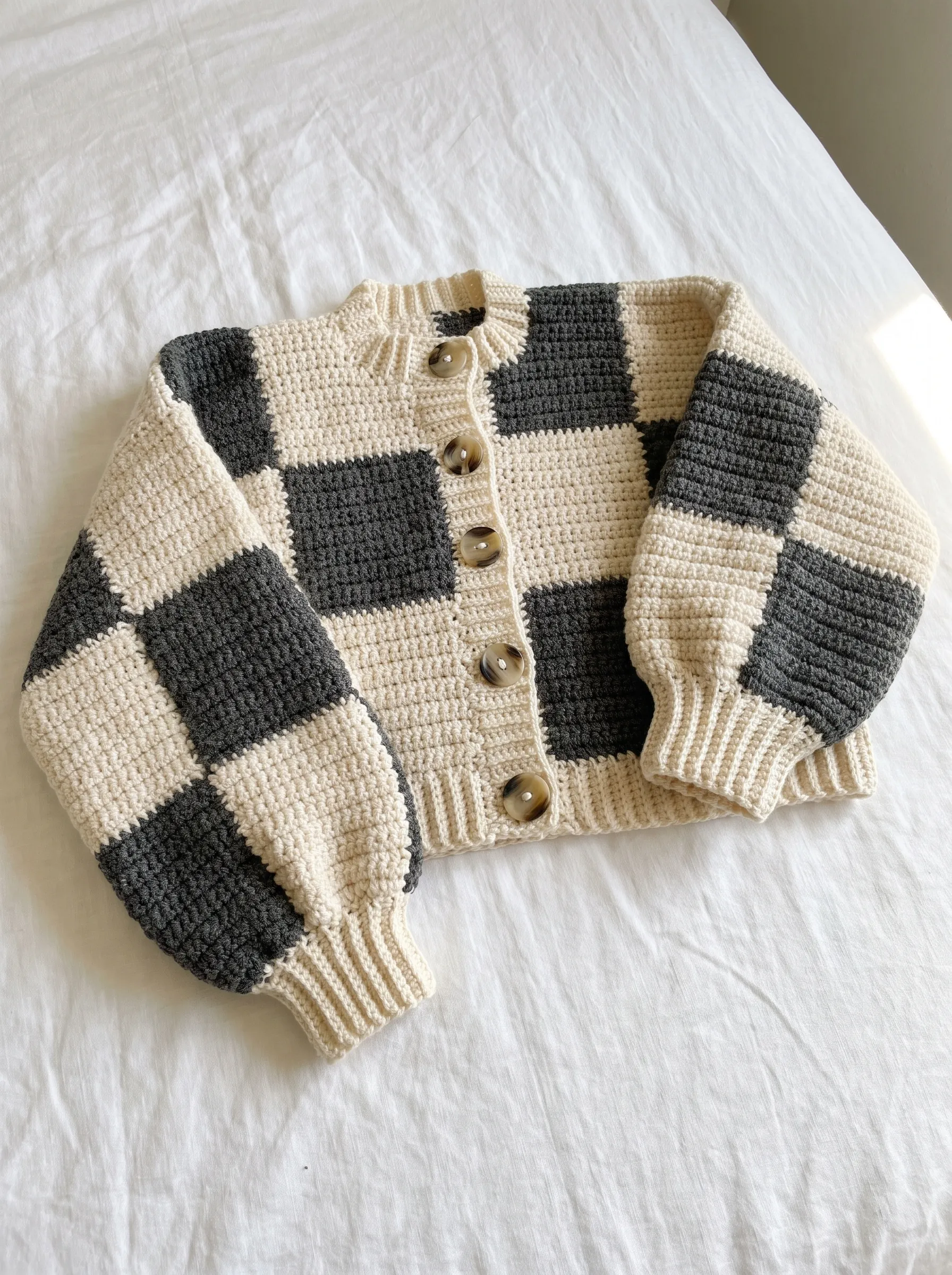
| Monochrome checkerboard | Boxy cropped balloon sleeve | Chunky wool | 6.5 mm | 24 squares |
| Sunburst floral boho | Raised floral center motifs | Worsted cotton | 4.5 mm | 42 squares |
| Espresso brown ribbing | Back loop slip stitch trim | Worsted wool | 4.5 mm | 38 squares |
| Textured stitch sampler | Waffle and moss stitch blocks | Worsted wool | 5.0 mm | 36 squares |
| Retro seventies palette | Cinnamon and avocado palette | Worsted cotton | 5.0 mm | 40 squares |
| Airy summer linen blend | Open lace cluster motifs | DK linen cotton | 4.0 mm | 48 squares |
| Forest hooded duster | Deep hood and patch pockets | Bulky wool blend | 6.0 mm | 54 squares |
| Longline daisy duster | Mid-thigh coat silhouette | DK wool blend | 4.0 mm | 72 squares |
1. Autumn Earth Tones With Ribbed Trim

An earthy palette anchored by terracotta, mustard, moss, and cream gives any patchwork sweater an instant vintage feel. The front and back bodies use identical seven-inch solid granny squares, allowing the rich wool texture to stand out without complex lace openings catching on everyday jewelry.
Crocheting a classic granny square cardigan gives you complete control over color placement and body ease. Drop shoulders create a slouchy, comfortable silhouette that slides easily over thermal tops or linen dresses.
When crocheting forty-two squares, weave in yarn ends every five blocks rather than facing hundreds of dangling threads during final assembly. It keeps the project tidy and enjoyable from start to finish.
2. Neutral Sage and Beige Mattress Seams

Seaming neutral squares with a blunt tapestry needle creates an invisible join that lets the geometric pattern flow smoothly across the chest. Working through the inner loops only prevents thick ridges from forming along the inside of the garment, ensuring comfort around sensitive underarm areas.
Alternating soft sage green with unbleached oatmeal wool brings an organic calmness to your studio table. Keeping each square within a quarter-inch tolerance during blocking helps the four-corner intersections meet cleanly when stitching long horizontal and vertical seams together.
3. Pastel Sorbet Squares on Raw Birch

Pastel tones of mint green, soft lavender, buttercup yellow, and powder pink transform traditional granny squares into a cheerful modern layer. Using a slightly smaller 4.5 mm hook tightens the granny clusters, preventing the body fabric from stretching out of shape after repeated washing.
A wide lavender ribbed placket worked in back-loop single crochet stabilizes the front edges. Tortoiseshell buttons add grounding contrast against the sweet yarn shades, giving the finished piece a tailored look that pairs effortlessly with our collection of crochet wearables.
4. Monochrome Checkerboard Cropped Build

Two high-contrast tones such as charcoal gray and natural cream turn basic solid granny squares into a striking modern checkerboard. Chunky wool builds each square in just four rounds, making this one of the quickest wearable projects to finish over a two-week span.
Cropping the hemline just above the hip bone prevents bulky wool from feeling heavy or overwhelming your frame. Gathering the wide sleeves into dense, narrow ribbed cuffs creates flattering balloon volume that stays comfortably in place while you work at your desk.
5. Sunburst Floral Bohemian Cardigan

Sunburst floral squares feature puffy cluster petals radiating from a circular center, bringing soft organic curves into an otherwise angular patchwork structure. Working the petals in golden ochre and forest green against natural unbleached cotton yields a rich vintage aesthetic.
Cotton yarn gives clean petal definition and resists pilling, though it carries slightly less bounce than wool. Adding an extra round of solid stitches around each floral motif reinforces the outer edges, providing firm anchors for seam stitches without pulling the delicate flower centers.
6. Espresso Brown Ribbed Collar and Hem

Sturdy ribbing is essential on any handmade sweater to stop the neckline from stretching under the weight of the sleeves. Working back-loop slip stitches in deep espresso wool produces an elastic, knit-look band that hugs the nape of the neck and stays snug around the waistline.
Sewing carved wooden buttons along the band completes the bespoke finish. If you enjoy cozy wrap garments with relaxed armholes, explore our guide to crochet shrug patterns for alternative construction methods using simple folded rectangles.
7. Textured Stitch Sampler Blocks

Using one undyed ivory yarn while varying the stitch pattern across squares creates an understated, tactile sampler cardigan. You can mix deep waffle squares, dense alpine stitches, and airy moss stitch blocks to add visual intrigue without introducing competing color schemes.
Because different crochet stitches contract at varying rates, check your row gauge carefully for each texture. Working each square to an exact six-inch measurement rather than a set row count ensures that every block sews together flush without bunching along the seam lines.
8. Retro Seventies Cinnamon and Avocado

Seventies-inspired knitwear continues to dominate handmade fashion with its warm, nostalgic combination of avocado green, cinnamon orange, mustard, and cream. Standard solid double crochet squares provide the perfect canvas for these saturated tones to interact boldly.
Using worsted cotton yarn gives the garment crisp drape and breathability, making it ideal for layering over denim shirts during crisp autumn afternoons. Washing the cotton yarn in cold water helps keep the vibrant earth tones looking fresh through regular wear.
9. Airy Summer Linen Blend Openwork

Patchwork outerwear is not reserved solely for cold winter months. Choosing a lightweight blend of flax linen and unmercerized cotton creates a breezy, open cardigan that breathes easily when worn over summer tank tops or sundresses in warm weather.
Linen softens noticeably with every wash, developing a luxurious drape that hangs closer to the body than springy wool. Keep the seams relaxed and flexible by using a loose slip stitch join so the garment moves fluidly with your body.
10. Forest Hooded Duster Silhouette

Adding a hood transforms a casual cardigan into an all-weather coat for outdoor walks and woodland strolls. Building a hood is surprisingly simple: seam six squares into a rectangle, fold it in half, stitch the top edge closed, and join the base directly to the cardigan neckline.
Muted forest tones like spruce green, birch white, and smoky taupe evoke peaceful outdoor landscapes. Deep patch pockets made from two matching squares sewn to the lower front panels provide cozy hand warmers and space for keys.
11. Longline Daisy Duster Coat

Extending your patchwork grid down to mid-thigh creates an elegant duster coat that pairs beautifully with boots and trousers. Using seventy-two smaller four-inch daisy squares produces fine textile detail without adding excessive bulk to your silhouette.
Because a long duster uses substantial yardage, choose a lightweight DK wool blend to keep the finished coat comfortable to wear all day. A dark chocolate brown outer border frames the floral squares, tying the entire layout together into a unified heirloom.
Planning Your Cardigan Layout and Square Count
To achieve a well-fitting crochet patchwork cardigan, understanding your target dimensions before crocheting is essential. A standard drop-shoulder cardigan consists of five primary components: one rectangular back panel, two symmetrical front panels, and two tapered sleeve tubes.
For a comfortable women's medium with a forty-four-inch chest circumference, you need panels that measure twenty-two inches across. Using five-and-a-half-inch squares, four squares wide by five squares tall creates a back panel measuring twenty-two by twenty-seven inches.
Each front panel uses two squares across and five squares tall, leaving a comfortable front opening for your ribbed placket. Sleeves typically use three squares around the armhole, tapering down to two squares at the wrist, or four rows of three squares for a modern, relaxed balloon sleeve.
Two Worked Examples for Square Counts
Every size comes from the same three steps. Divide your chest measurement by two to get the back panel width, divide that width by your blocked square size, then halve the number of squares for each front panel. Round to whole squares and use the ribbed placket to make up any small difference.
For a relaxed 48 inch chest with 6 inch squares, the back is four squares wide and four tall, so it measures 24 by 24 inches. Each front is two squares wide and four tall. With three-by-three sleeve tubes, the whole cardigan uses 32 body squares plus 18 sleeve squares, or 50 in total.
For a 40 inch chest with 5 inch squares, the back is four squares wide and five tall, which gives 20 by 25 inches. Each front is two squares wide and five tall, and each sleeve uses three squares around by four long. That adds up to 40 body squares plus 24 for the sleeves, or 64 squares.
Always block a test square first and measure it after drying. Squares that shrink or grow by even half an inch change every panel, so recalculate with your real blocked size before you start seaming.
Choosing the Right Yarn and Managing Garment Weight
The yarn you choose directly determines how your finished garment drapes, breathes, and withstands daily wear.
The Craft Yarn Council's standard yarn weight system helps you compare worsted and DK options. Worsted weight wool remains the most dependable choice for patchwork cardigans because its natural crimp and elasticity absorb the tension of multiple sewn seams without tearing.
While pure acrylic yarn is budget-friendly and easy to wash, heavy acrylic can stretch downward permanently under its own weight, causing sleeves to grow past your knuckles. Blending acrylic with wool or choosing a sturdy plied cotton provides structural memory that holds its shape.
If you prefer cotton for breathability, select an unmercerized worsted cotton and use a hook half a millimeter smaller than suggested. This creates compact, supportive stitches that stop the squares from sagging when carrying your phone or keys in the front pockets.
Planning the Geometric Floor Grid for a Patchwork Cardigan
Before picking up a needle, lay every blocked square onto a clean floor to map out the entire cardigan schematic. Stand back and snap a quick photo on your phone to check whether dark navy and rust blocks are clustering too heavily on one side of the chest or sleeve cuff.
A small, cropped cardigan can be built from roughly thirty squares: ten for the back panel, five for each front panel, and five for each sleeve. Measuring the laid-out grid gives you the exact chest circumference and sleeve length before joining, eliminating surprises later.
Reinforcing Shoulder Seams on a Patchwork Cardigan
The shoulder seams bear the full physical weight of your sleeves and back panel, making secure joining technique vital. Sewing the top seams with a strong backstitch or working a row of tight slip stitches along the interior edge prevents the neckline from sagging off your shoulders over time.
For cardigans made with heavier fibers, weaving a strand of clear elastic sewing thread alongside your yarn through the shoulder seam adds invisible reinforcement. It bounces back after wearing, helping the seam keep your original garment measurements.
Finishing, Blocking, and Care for a Crochet Patchwork Cardigan
Proper finishing is what elevates a handmade patchwork sweater from homemade to professional quality. Wet blocking or steam blocking every individual square to exact matching dimensions before seaming saves hours of frustration and prevents puckered, wavy seams.
Never hang a finished crochet cardigan on a wire hanger, as the downward weight will stretch the shoulder loops permanently. Fold it gently and store it flat on a wooden closet shelf with cedar blocks to protect the natural fibers from moths between seasons.
Frequently Asked Questions
How many squares do I need for a crochet patchwork cardigan?
A small, cropped cardigan can use about 30 squares, while a full-length women's medium built from 5.5-inch squares needs roughly 50 to 60 including sleeves. Smaller four-inch motifs raise the count considerably, so always work from your measured panel sizes.
What is the best method to join crochet patchwork squares?
The invisible mattress stitch worked through the inner loops creates the flattest seam without ridges. For a decorative raised look, join right sides together using single crochet in a contrasting yarn color.
How do I prevent my crochet cardigan from stretching out of shape?
Steam block every square to identical measurements before joining. Reinforce the top shoulder seams with slip stitches or clear elastic, and always store your finished cardigan folded flat rather than on a hanger.
Can a beginner make a crochet patchwork cardigan?
Yes, because each square is worked flat without garment shaping. Once you master a basic double crochet or granny square motif, you simply repeat it, block your pieces, and seam them into rectangular panels.
Planning and assembling your own crochet patchwork cardigan is one of the most rewarding milestones in garment making. Take time to steam block your squares, enjoy the mindful rhythm of hand-seaming, and create a cozy, bespoke layer that will bring warmth and handmade charm to your wardrobe for years to come.
Save This for Later
Pin this guide to your crochet board so it is ready when you start your next project.
Save on Pinterest