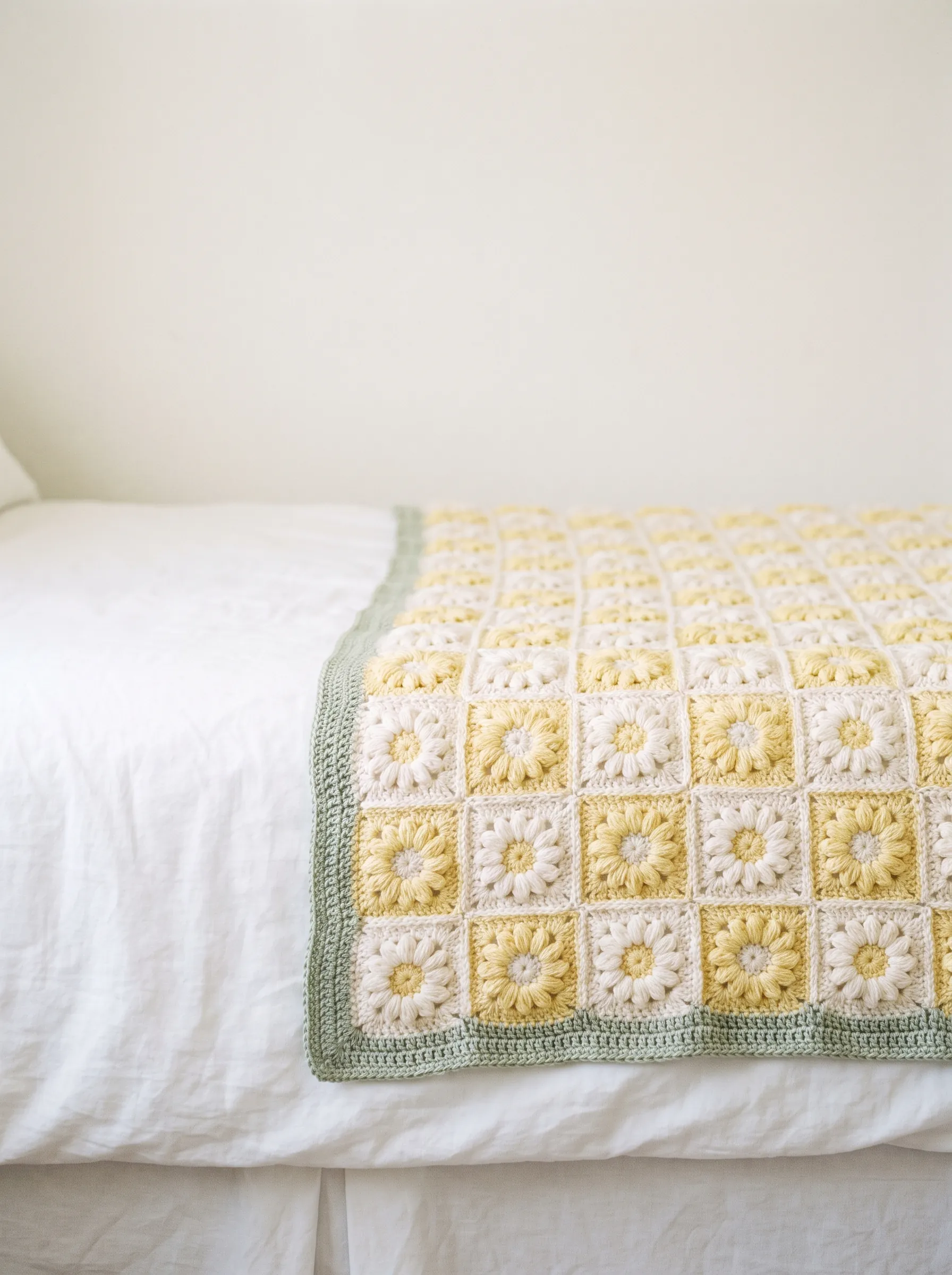
Crocheting your own crochet flower blanket brings the quiet beauty of a wild cottage garden straight into your living room. Whether you stitch three-dimensional puff blossoms, delicate daisy squares, or flat tapestry floral panels, each botanical motif adds warm texture and handmade personality to your home.
Making a modular floral throw is one of the most relaxing craft projects because you can crochet individual squares anywhere. You can complete small floral centers on an evening commute, join a dozen blocks over the weekend, and watch a sprawling botanical heirloom grow row by row.
Beginners often hesitate before attempting intricate flower motifs, worried about uneven petals or curling corners. Working with consistent tension, counting corner chain spaces, and steam blocking your squares flat transforms simple yarn into crisp geometric petals that align smoothly during assembly.
Fiber choice plays an essential role in how your blanket drapes, washes, and keeps its shape across years of cozy use. Smooth worsted cotton yields crisp petal definition, while a premium acrylic yarn provides lightweight loft, soft warmth, and easy machine washability for everyday family living.
The eleven curated designs below showcase timeless color palettes, dimensional petals, and clever seaming methods. Use these detailed breakdowns, yarn recommendations, and styling suggestions to plan a blooming botanical masterpiece that brings comfort to every season.
Table of Contents 18 sections
Botanical Crochet Flower Blanket Designs at a Glance
Compare motif styles, yarn weights, and assembly methods before planning your blanket.
| Design Style | Flower Motif Style | Yarn Weight | Hook Size | Finished Dimensions |
|---|---|---|---|---|
| Classic daisy squares | Flat centered daisy | Worsted cotton | 4.5 mm | 48 x 60 inches |
| Puff petal bedspread | Raised puff petals | Worsted acrylic blend | 5.0 mm | 64 x 80 inches |
| Tapestry tulip throw | Two-tone colorwork | DK wool cotton | 4.0 mm | 50 x 50 inches |
| Botanical sampler | Mixed 3D flora | Worsted wool blend | 5.0 mm | 52 x 65 inches |
| African flower hexagons | Six-sided petals | DK merino blend | 4.0 mm | 55 x 70 inches |
| Golden sunflower throw | Textured popcorn center | Worsted acrylic | 5.0 mm | 45 x 60 inches |
| Pastel wildflower field | Soft meadow tones | DK organic cotton | 3.75 mm | 42 x 54 inches |
| Vintage cabbage rose | Multi-layer dimensional | Aran wool blend | 5.5 mm | 50 x 65 inches |
| Monochrome ombre grid | Tonal gradient floral | Worsted acrylic | 5.0 mm | 46 x 58 inches |
| Linen lace botanical throw | Open airy lace motifs | Sport weight linen | 3.5 mm | 40 x 56 inches |
| Geometric daisy grid | High-contrast blocks | Worsted acrylic yarn | 5.0 mm | 50 x 60 inches |
1. Classic Daisy Granny Squares

A quartet of neat daisy squares showcases the timeless appeal of botanical crochet. Working a smooth circular center in golden yarn and surrounding it with twelve double crochet petals creates a crisp daisy granny square that sits flat inside its neutral border rounds.
Using a natural ash wood table as your layout board lets you check stitch height against a ruler. Adding chain-two spaces in each corner helps keep the corners square and stops your floral blocks from twisting when you seam them into long blanket panels.
Weaving in petal yarn tails as you finish each flower center keeps your work basket tidy and organized. Taking a few moments to secure these inner ends early saves dozens of tedious finishing hours when joining sixty squares later.
2. Full Daisy Puff Stitch Bedspread

Spreading a large floral throw across a light linen bed instantly warms the bedroom with cozy handcrafted texture. Each square features an embossed puff stitch flower that rises above the background fabric, giving the overall coverlet tactile depth that invites you to snuggle under it.
Working puff stitches requires relaxed tension so every yarn over loop draws up to the same height. Keeping your working yarn loose ensures the rounded petals remain plump and uniform rather than pinched or flattened across your rows.
A wide cream border frames the botanical grid and anchors the playful floral energy. The generous drape covers mattress corners gracefully, making this heirloom piece an eye-catching focal point for master bedrooms or guest rooms alike.
3. Tapestry Tulip Blossom Panel

Tapestry crochet offers a sleek, modern alternative to dimensional floral motifs by embedding blossom silhouettes directly into the fabric. Alternating warm taupe and unbleached cream creates subtle tulip silhouettes that look sophisticated in Scandinavian and neutral farmhouse decors.
Carrying the dormant yarn strand inside the working single crochet stitches maintains even fabric density across the entire throw. This technique produces an opaque, double-thick blanket that provides comforting heft without heavy bulk.
Blocking the flat panel under damp cotton pressing cloths opens up the stitch definition. The crisp vertical lines between petals and background remain straight and legible, creating graphic botanical artwork that looks striking on any sofa.
4. Botanical Sampler on Wooden Ladder

Draping a textured sampler over the rungs of a natural birch ladder highlights the rich variety of botanical stitches. Combining raised cabbage roses, field daisies, and textured lavender sprigs across different squares keeps the crochet process engaging from the first block to the last.
Sticking to a harmonious palette of sage, cream, blush, and soft moss prevents a multi-flower blanket from appearing chaotic. The unified background color frames each unique blossom, tying twenty different botanical squares into one cohesive collection.
If you enjoy creating textured home accents that combine structural stitches with cozy warmth, browse through our crochet home decor projects for matching plant cozies and decorative pillow patterns.
5. African Flower Hexagonal Mosaic

Six-sided African flower motifs produce an interlocking mosaic that breaks away from traditional square grids. Deep plum flower hearts surrounded by muted sage and oatmeal outer rings bring an antique greenhouse charm to your living room seating.
Connecting hexagons along their six angled facets produces delightful zigzag margins along top and bottom edges. You can leave these points open for a decorative saw-tooth hem or fill the triangular gaps with half-motifs for a straight border finish.
Joining motifs on the final round using slip stitches creates a flat, durable seam that holds firm under daily family use. The smooth merino blend yarn provides gentle warmth while remaining pleasantly soft against bare arms and shoulders.
6. Golden Sunflower Window Throw

Rich chocolate brown centers paired with vibrant saffron yellow petals capture the nostalgic warmth of late summer sunflowers. Using textured popcorn stitches for the floral core creates tactile depth that contrasts beautifully with flat white background corners.
Folding this cheerful throw over a sunny windowsill turns your favorite reading corner into an inviting retreat. The sturdy worsted yarn withstands direct sunlight and repeated wash cycles without losing its bright, joyful coloration.
Sunflower squares also make thoughtful housewarming gifts that celebrate new beginnings. For another deeply textured blanket project featuring meditative stitch repeats, explore our detailed guide on the crochet waffle stitch blanket pattern.
7. Pastel Meadow Wildflower Throw

Soft pastel tones of mint green, pale blush pink, buttercup yellow, and sky blue turn traditional floral squares into a gentle springtime meadow. Using lightweight organic cotton yarn creates an airy blanket suitable for nursery cribs, carriage rides, or warm summer evenings.
Arranging the pastel flower centers randomly across the blanket grid avoids rigid color banding. Scattering each hue evenly throughout the layout gives the finished throw a spontaneous, organic movement that mimics natural wildflowers in a field.
Organic cotton feels gentle against sensitive skin and washes clean with mild wool detergent. Its natural matte finish highlights every delicate petal stitch without artificial sheen or synthetic static buildup.
8. Vintage Heirloom Cabbage Rose Throw

Multi-layered cabbage roses worked in soft blush and antique cream bring romantic Victorian luxury to modern interiors. Each blossom begins with a tight center bud before expanding through successive rounds of front-loop petals, producing impressive three-dimensional realism.
Because multi-tiered petals require extra yarn and add substantial weight, spacing them between flat solid squares balances the blanket heft. This checkerboard approach keeps the overall throw supple and manageable rather than stiff and heavy.
Draping this ornate coverlet across an accent chair turns everyday bedroom furniture into a vintage statement. The rich wool blend maintains petal crispness, helping the dimensional blooms hold their shape through years of display.
9. Monochromatic Ombre Floral Grid

Tonal gradients prove that floral crochet can look thoroughly modern, understated, and architectural. Shifting through five carefully graduated shades of charcoal, slate, dove grey, and pale silver creates a sophisticated ombre transition that elevates traditional cottage motifs.
Arranging dark charcoal blossoms along the bottom edge and transitioning to pale silver at the top creates grounded visual balance. The ombre gradient draws the eye smoothly upward, making small rooms feel taller and more expansive when draped across tall headboards.
Using durable acrylic yarn for ombre projects ensures excellent color consistency between different dye lots. Acrylic holds dye saturation reliably across washings, keeping your dark slate and pale mist tones crisp without bleeding into adjacent stitches.
10. Airy Linen Lace Botanical Motifs

Openwork chain spaces and delicate picot tips transform traditional floral motifs into breathable summer lace. Suspended from a smooth wooden wall dowel with raw jute twine, this airy linen throw functions as architectural fiber art when not draped across your shoulders.
Linen yarn has virtually no bounce during stitching, so maintaining steady finger tension is vital. While stiff on the skein, pure linen softens dramatically after its initial lukewarm soak, developing liquid drape and a lustrous vintage sheen that improves with age.
The open geometric lace design allows refreshing breezes to pass through while offering gentle warmth against evening chill. It makes an elegant patio wrap for twilight garden dinners or cool coastal strolls.
11. High-Contrast Geometric Daisy Quilt

Pairing deep midnight navy with bright white daisy petals and mustard yellow centers delivers an energetic modern aesthetic. The sharp contrast pushes floral crochet beyond traditional pastel aesthetics into vibrant mid-century modern design territory.
Folding the completed blanket in neat quarters reveals how the contrasting navy borders align into an eye-catching secondary grid. High-contrast blocks require careful seam placement so that corner intersections line up with millimeter precision across the blanket face.
Worsted acrylic yarn makes this design practical for family dens, playrooms, and picnic outings. It resists stains, dries rapidly after machine washing, and keeps its color well through regular household use.
Designing Your Custom Crochet Flower Blanket Layout
Planning your layout before joining ensures a balanced distribution of color and texture across your finished blanket. Start by determining your desired blanket dimensions based on how you intend to use the finished throw.
A standard baby blanket measures roughly 30 by 36 inches and takes thirty six-inch squares in five columns of six rows. A 36 by 48 inch lap blanket uses forty-eight squares in six columns of eight rows, and a 48 by 60 inch sofa throw needs eighty in eight columns of ten rows.
For a queen-sized bedspread of about 60 by 78 inches, plan for 130 six-inch squares in ten columns of thirteen rows. Sketching your grid on paper or laying blocked squares out across a clean floor helps you spot unintended color clusters before sewing.
Choosing the Right Yarn and Joining Techniques
Selecting the right fiber determines how your crochet floral throw feels, washes, and maintains its shape over time.
The Craft Yarn Council's standard yarn weight system shows how worsted, DK and aran differ before you buy. Acrylic yarn remains the most popular choice for floral blankets because of its affordability, wide color range, and lightweight loft that keeps large bedspreads manageable.
If you prefer natural fibers, unmercerized worsted cotton produces incredible petal definition with crisp stitch clarity, though the finished blanket will feel considerably heavier. Blending superwash wool with cotton combines natural elasticity and drape, ensuring your puff petals bounce back after washing.
When joining your botanical motifs, the flat zipper join worked with slip stitches creates a firm, decorative seam that lies completely flat against sofa cushions. For an invisible connection, use a tapestry needle and mattress stitch through the inner loops only, letting your blossoms meet seamlessly across each row.
Scalloped Shell Border Edging for a Crochet Flower Blanket
A graceful border frames your floral squares like an ornate wooden moulding around a garden oil painting. Working clusters of five double crochet stitches into alternating base loops creates wavy scalloped fans that echo the petal shapes inside each motif.
Before crocheting your shell edging, work one round of solid single crochet around the entire blanket perimeter. This foundation round evens out minor tension differences between seam intersections, giving your shells a steady base to sit upon.
Blocking the border with cool steam flattens any curled scallop edges into crisp semicircular fans. This quick final step gives your handmade throw an immaculate boutique finish that drapes flat along sofa cushions.
Blocking Flower Squares for Straight Seams
Accurate blocking is the secret behind every straight, professional-looking crochet flower blanket. Pinning each newly finished motif onto an interlocking foam grid mat with rust-proof stainless steel T-pins pulls stubborn corners into square before seaming.
A light mist of cool water relaxes the fibers, allowing uneven petal stitches to settle into uniform alignment without stretching the yarn out of shape. Let the squares dry completely in a well-ventilated room before unpinning them from the board.
Standardizing sixty or seventy squares to identical four-inch or six-inch dimensions makes joining effortless. Your corner joins will align naturally, eliminating bunching, puckering, or skewed diagonal distortion across long blanket seams.
Rolling and Storing Your Finished Flower Blanket
Rolling your finished blanket reveals its colorful border scallops and textured floral centers in a compact, elegant package. Binding the roll with unbleached cotton twill ribbon and a handwritten maker tag creates an unforgettable presentation for baby showers, weddings, or milestone birthdays.
When storing handmade blankets during warmer months, always choose breathable cotton or linen storage bags rather than sealed plastic containers. Natural airflow prevents moisture buildup and protects delicate wool or cotton fibers from mildew and odors.
Tucking a small sachet of dried lavender or cedar shavings into the fold deters moths while imparting a fresh garden scent. When autumn returns, your blanket unrolls fresh, fragrant, and ready to provide instant fireside warmth.
Frequently Asked Questions
How many flower squares do I need for a full crochet flower blanket?
Divide each blanket measurement by your square size. A 48 by 60 inch sofa throw needs 80 six-inch squares in eight columns of ten rows, and a 30 by 36 inch baby blanket uses 30 squares. A queen bedspread of about 60 by 78 inches needs around 130 squares before the border.
What is the best yarn to use for a crochet flower blanket?
Worsted weight acrylic or cotton-acrylic blends work best for everyday floral throws. They offer crisp petal definition, lightweight warmth, and machine washability that stops heavy bedspreads from stretching under their own weight.
How do I prevent my flower granny squares from curling at the edges?
Curling happens when tension is too tight around the petal rounds. Loosen your grip, check your corner chain spaces, and always wet-block or steam-block every square to exact grid dimensions before sewing your blanket seams together.
Can a beginner crochet a flower blanket successfully?
Yes, beginners can start with simple daisy granny squares. Because each motif is worked individually from the center out, you can practice petal tension on a few test squares before committing to an entire blanket project.
Crafting a crochet flower blanket fills your home with handcrafted garden charm and heirloom warmth. Take time to block each floral motif, experiment with cheerful color palettes, and create a botanical treasure that your family will cherish through cozy mornings and chilly evenings.
Save This for Later
Pin this guide to your crochet board so it is ready when you start your next project.
Save on Pinterest