Crocheting your own monstera crochet pattern brings vibrant tropical foliage into your living space without worrying about sunlight or watering schedules. The iconic split-leaf silhouette of Monstera deliciosa translates beautifully into textured fiber art, from tabletop coasters to architectural wall hangings.
Crafting botanical leaf motifs is one of the most satisfying small projects because each piece works up quickly with minimal yarn. A single skein of green cotton yields a full set of coasters or several decorative appliqués in just a few relaxing hours.
Achieving realistic leaf splits, known botanically as fenestrations, is simpler than it appears. By skipping foundation stitches and bridging the gaps with calculated chain loops, you sculpt natural open slits that fan out symmetrically from the central vein.
Yarn choice determines whether your foliage stays crisp and flat or curls around the margins. Working with smooth mercerized cotton gives your leaf stitches clean structural definition, deep color saturation, and the stiffness needed for practical tabletop use.
The eleven curated projects below explore versatile decor ideas, from delicate thread bookmarks to dramatic dining table runners. Use these detailed breakdowns, yarn recommendations, and blocking techniques to bring evergreen handmade beauty to every corner of your home.
Table of Contents 16 sections
Monstera Crochet Leaf Projects at a Glance
Compare project types, yarn weights, and finished sizes before starting your botanical makes.
| Project Style | Application Type | Yarn Weight | Hook Size | Finished Dimensions |
|---|---|---|---|---|
| Linen cushion appliqué | Sewn throw pillow accent | DK cotton blend | 3.5 mm | 8 x 10 inch leaf |
| Canvas tote appliqué | Everyday bag adornment | Worsted cotton | 4.0 mm | 9 x 11 inch leaf |
| Desk coaster quartet | Absorbent mug coasters | DK mercerized cotton | 3.5 mm | 5 x 6 inches |
| Lace book marker | Slender page placeholder | Size 10 cotton thread | 1.75 mm | 3 x 4 inch leaf |
| Branch wall tapestry | Hanging wall fiber art | Chunky cotton cord | 5.5 mm | 14 x 18 inches |
| Jute wall garland | Rustic draped bunting | Sport weight cotton | 3.25 mm | 6 foot garland |
| Swivel clasp keychain | Miniature bag charm | Fingering cotton | 2.5 mm | 2.5 x 3 inches |
| Graduated trio trivets | Warm dish table protectors | Aran cotton cord | 5.0 mm | 7, 9, 11 inches |
| Leaf runner mosaic | Dining table centerpiece | DK mercerized cotton | 3.75 mm | 12 x 48 inches |
| Brass hoop hanging | Modern geometric wall art | Sport weight cotton | 3.0 mm | 10 inch hoop |
| Oversized placemat | Table setting charger | Bulky cotton rope | 6.0 mm | 14 x 16 inches |
1. Linen Cushion Botanical Appliqué

Stitching a crisp crochet monstera leaf onto a neutral cream linen cushion creates an instant focal point for living room armchairs. The raised double crochet ribs contrast against the smooth woven fabric, adding tactile depth that store-bought printed pillows cannot match.
Before attaching the leaf, steam block it completely flat so the outer points lay smoothly against the cushion face. Pin the motif securely with dressmaker pins, working outward from the central vein to ensure the split lobes do not twist or bubble.
Use matching green sewing thread and small whip stitches along the perimeter to secure the appliqué firmly. The finished pillow withstands daily lounging while introducing refreshing garden charm into neutral interior schemes.
2. Olive Green Tote Bag Accent

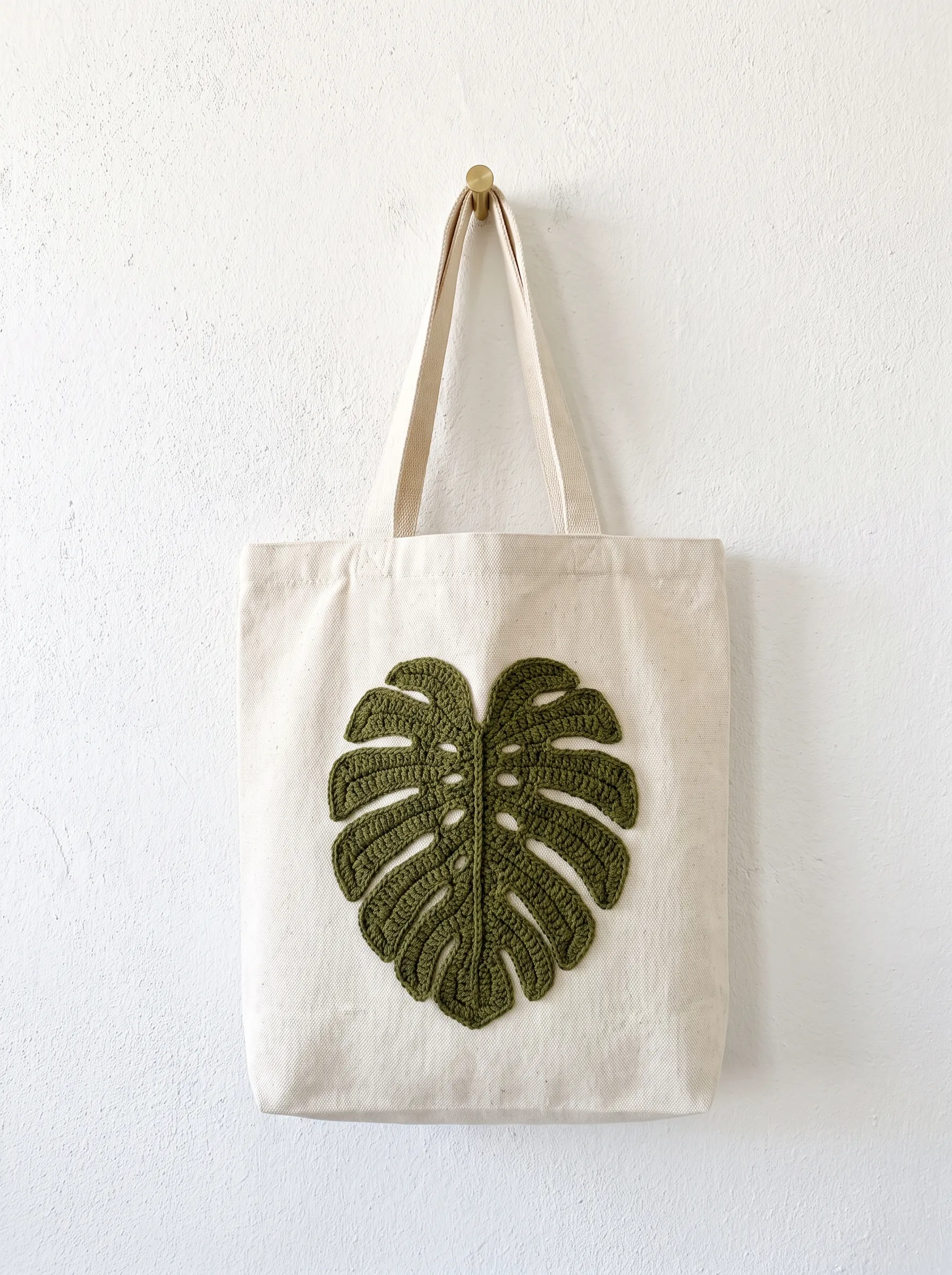
Transforming a plain canvas tote into a stylish market bag is as simple as sewing on a large fenestrated leaf motif. Olive green cotton yarn pairs naturally with heavy unbleached canvas, creating an earthy accessory for farmer market trips and bookstore visits.
Working with a slightly smaller 4.0 mm hook creates dense, sturdy stitches that resist snagging when brushing past grocery carts. The deep leaf splits open naturally across the bag surface, showcasing the distinctive tropical silhouette with crisp clarity.
Stitching the motif across the front panel reinforces the bag fabric and hides minor stains or wear. It makes a thoughtful handmade gift for plant enthusiasts who appreciate practical, durable everyday accessories.
3. Absorbent Desk Mug Coasters

A quartet of leafy coasters brings refreshing botanical cheer to your home office desk. Working each monstera leaf coaster in tightly plied cotton creates a flat, thirsty pad that absorbs iced drink condensation while protecting wood surfaces from hot mug rings.
Beginning with a foundation chain that forms the central stem, you work progressive stitches from single crochet up to treble crochet to sculpt the rounded heart-shaped base. Calculated chain loops create the signature leaf cutouts without interrupting the outward rhythm.
The coasters stack compactly in a small ceramic dish or wrap neatly with twine for gifting. Mercerized cotton ensures the leaves retain their rich emerald color through repeated washings after inevitable coffee drips.
4. Slender Lace Thread Bookmark

Using delicate ecru lace thread and a steel hook scales the tropical leaf down into an exquisite, paper-thin page marker. The fine lace stitches slip cleanly between book pages without stressing the binding or leaving bulky indentations on paper.
A slender chain cord extends from the leaf petiole, terminating in a soft matching tassel that hangs decoratively down the book spine. The delicate threadwork showcases the intricate fenestrations in miniature, turning quiet reading hours into an aesthetic pleasure.
Soaking the finished bookmark in diluted liquid starch and pressing it under parchment paper produces a crisp, parchment-like stiffness. It makes an enchanting gift tucked inside a vintage gardening book or novel.
5. Forest Green Wall Hanging Tapestry

Working with substantial cotton cord scales the modest leaf motif into an impressive statement crochet wall hanging. The deep forest green yarn creates bold visual weight that stands out against minimalist white plaster or exposed brick backdrops.
Suspending the completed leaf from a raw birch dowel with simple jute cord introduces rustic cottage textures into modern rooms. Chunky stitches highlight the sculpted leaf cutouts, creating dramatic shadows as sunlight shifts across the room during the day.
For more inspiring ideas on adding handmade warmth to bedrooms and studio spaces, explore our creative guide to crochet room decor ideas for wall tapestries and decorative hangings.
6. Cascading Leaf Garland Bunting

Draping a leafy garland across a fireplace mantel or along an empty hallway wall brings whimsical outdoor vitality inside. Alternating soft sage green and deep olive leaves along twisted jute twine creates natural color variation reminiscent of a thriving jungle canopy.
Crocheting the leaves directly onto the hanging cord eliminates tedious sewing later. Simply crochet a series of chain stitches between each leaf stem to space the motifs evenly along the twine, ensuring a balanced drape across your wall.
This lightweight botanical bunting stores easily rolled around a cardboard tube between seasonal celebrations. It provides charming, eco-friendly party decor for garden gatherings, baby showers, or earth-inspired birthday celebrations.
7. Miniature Leaf Keychain Bag Charm

Scaling the leaf motif down with fingering-weight yarn and a small hook yields a delightful three-inch keychain accessory. Attaching an antique bronze swivel clasp through the stem loop creates a sturdy charm that clips effortlessly to backpacks, keyrings, or purse handles.
Dense tight stitches give the miniature leaf enough body to hold its form inside crowded handbags without crumpling. The tactile cotton texture makes your keys easy to locate by touch at the bottom of a deep tote.
These pint-sized botanical makes are fantastic stash-busting projects that consume mere yards of leftover green yarn. Make a dozen in various shades of moss, emerald, and chartreuse for quick handmade craft fair stock.
8. Graduated Trio of Table Trivets

A nested set of three graduated leaf mats provides stylish table protection beneath warm teapots, serving bowls, and baking dishes. Crocheting with heavy aran-weight cotton cord yields substantial pads that protect dining tables from warm dishes.
Use them under warm teapots and serving bowls, not under a pan straight from the oven, because cotton can scorch.
Working raised surface slip stitches along the central stem and secondary veins introduces architectural realism and extra thickness. The elevated ridges keep warm dishes slightly raised, promoting air circulation that helps prevent heat marks on wooden dining tables.
Arranging the small, medium, and large leaves in an overlapping cluster creates a striking dining centerpiece when not in active kitchen use. The thick cotton cord washes cleanly in the washing machine after family meals.
9. Interlocking Leaf Dining Runner

Assembling dozens of individual crochet leaves into an interlocking dining runner transforms everyday tables into lush banquet settings. Joining the leaf tips in an overlapping diagonal arrangement creates an organic, meandering path down the center of an oatmeal linen runner.
Mercerized cotton provides subtle sheen and liquid drape, allowing the runner to cascade softly over table ends. The open fenestrations create lovely shadow patterns on the table linen below, adding layered depth to dinner party table settings.
If you enjoy making cohesive botanical accents for entertaining and everyday living, browse through our crochet home decor guides for coordinating coaster patterns and handmade linen placemats.
10. Modern Brass Ring Botanical Hoop

Suspending a single sculpted sage green leaf inside a sleek brass craft hoop creates high-end contemporary wall decor. Securing the outer leaf tips to the metal ring with transparent monofilament thread gives the illusion of a floating botanical specimen.
A slender brass chain suspended from a wall nail completes the gallery-worthy look. The warm golden reflections from the brass hoop contrast beautifully with the cool matte cotton leaf, complementing modern bohemian and mid-century interiors alike.
Choosing a muted sage or eucalyptus green tone enhances the minimalist zen aesthetic. This lightweight hanging requires only a small picture hook, making it ideal for styling rental apartments without drilling large wall holes.
11. Oversized Dinner Charger Placemat

A generous sixteen-inch leaf placemat provides an earthy foundation for ceramic dinner plates, bowls, and cutlery. Worked in vibrant emerald cotton rope, this heavy charger adds bold texture and protective cushioning to rustic wood dining tables.
The broad leaf surface easily accommodates standard ten-inch dinner plates while allowing the sculpted side fenestrations to peek out decoratively around the rim. The thick cord weave prevents plates from clattering against table surfaces during dinner parties.
Sponging spills with warm water keeps the cotton rope looking fresh between meals. Its substantial weight keeps the placemat firmly seated on the table without sliding around during use.
How to Shape the Leaf Splits
Draw or print a leaf outline at the finished size and keep it beside you while you work. Crochet the central vein as a foundation chain, then work each side outward from it so both halves grow at the same pace and stay symmetrical.
To make a split, skip a few stitches along the edge, chain across the gap, and work back into the chain on the next row. Longer chains give deeper openings, so vary the gap width from the base of the leaf to the tip.
Lay the work on your outline after every few rows. Adjust the next section as you go, because a leaf that drifts from its template is much easier to correct early than to rip back at the end.
Choosing the Best Cotton Yarn for Your Monstera Crochet Pattern
Selecting the correct fiber is crucial when making botanical crochet items that must hold their shape.
The Craft Yarn Council's standard yarn weight system helps you compare cotton weights before you buy. While animal fibers like wool have wonderful bounce, plant-inspired decor requires fibers with structural stiffness and crisp stitch definition.
Mercerized cotton remains the premier choice for monstera leaves because the mercerizing treatment adds strength, color depth, and a subtle sheen to a tightly plied cord. That smooth ply keeps every leaf cut crisp and stops the splits from looking fuzzy or indistinct.
For heavy items like trivets and placemats, unmercerized cotton cord or recycled cotton macramé rope gives you more thickness to protect the table surface. Cotton cords hold firm without stretching, so your dining mats stay flat even under heavy ceramic serving dishes.
How to Block and Stiffen Crochet Monstera Leaves
Proper blocking is the essential secret that transforms a curled, wavy leaf into a crisp botanical display. Because crochet stitches pull inward naturally along chain spaces, unblocked leaves often cup and curl at the edges.
To wet block your leaves, submerge them in cool water for ten minutes, gently press out the excess moisture between clean towels, and pin them onto an interlocking foam grid. Place rust-proof T-pins through the leaf apex, each outer lobe point, and open up each fenestration loop to its full width.
If you need extra stiffness for hanging art or wall garlands, mist the pinned motifs with a solution of equal parts water and liquid fabric stiffener or diluted craft glue. Allow the leaves to dry completely for twenty-four hours before unpinning, ensuring they remain stiff and flat indefinitely.
Frequently Asked Questions
How do you crochet the split leaf holes in a monstera pattern?
Fenestrations are created by skipping a set number of foundation stitches and chaining across the gap in one row, then working into that chain loop on the next row. This technique creates clean botanical slits that mirror real monstera foliage.
What is the best yarn for a crochet monstera leaf?
Mercerized cotton yarn in DK or worsted weight works best for monstera leaves. It provides crisp stitch definition, rich green color saturation, and the natural firmness needed to keep leaves flat without excessive curling.
How do I stop my crochet leaf coasters from curling?
Curling occurs when your tension is too tight around the curved leaf edges. Use a hook half a millimeter larger, check your stitch counts, and always steam or wet block your finished coasters on a foam grid mat before using them.
Can a beginner make a monstera crochet pattern successfully?
Yes, beginners can start with a basic monstera leaf coaster. The pattern uses standard stitches like single, double, and treble crochet, making it a manageable and rewarding project for makers learning intermediate shaping techniques.
Creating a monstera crochet pattern is a joyful way to bring the organic warmth of lush tropical greenery into your home decor. Take your time pinning each delicate leaf split during blocking, experiment with rich forest and sage shades, and enjoy crafting timeless botanical fiber art that never wilts.
Save This for Later
Pin this guide to your crochet board so it is ready when you start your next project.
Save on Pinterest